The Office of Student Life Analytics was established in 2008 to serve Texas Christian University, and more specifically, the Division of Student Affairs by providing the leadership and expertise to establish and promote a culture of accountability and continuous program improvement built upon active and intentional assessment and evaluation efforts.
By providing and sharing information about students and their co-curricular experiences, the Division of Student Affairs utilizes results to inform decisions and guides with the ultimate goal of enhancing student learning and development. Guided by student development theory in conjunction with CAS Standards, regional accrediting standards, and the best current practices, the Student Affairs Office of Student Life Analytics is committed to creating an ethos of active and intentional assessment planning for the purpose of program improvement and accountability.
Programs/Services:
- Campuswide survey coordination & administration
- Departmental evaluation
- Workshops
- Technical assistance
- Consultation
- Assessment planning
- Strategic planning
Staff
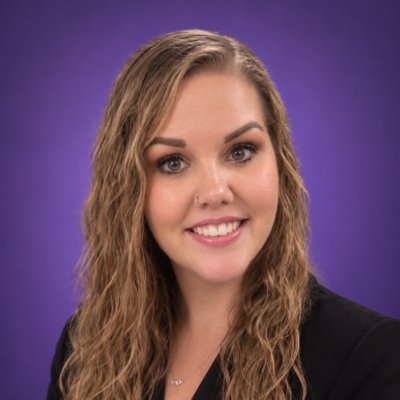
Dr. Lacey Quadrelli is the Director of Student Life Analytics in the Division of Student Affairs. She joined TCU in the Fall of 2026, committed to leading with data-informed strategy to strengthen student belonging, success, and retention. In this role, she provides consultation and support to staff across the division on campus-wide and departmental survey design, administration, and analytics, assessment planning, program evaluation, and professional development workshops.
Dr. Quadrelli brings over a decade of experience in higher education in roles spanning enrollment management, academic affairs, and student affairs. She joined TCU after more than 11 years at Oklahoma State University. Dr. Quadrelli earned a Doctor of Education in Higher Education from Ball State University. She also holds master’s degrees in both Quantitative and Educational Psychology as well as graduate certificates in both Institutional Research and College & University Teaching. She earned a Bachelor of Science in Liberal Arts from Oklahoma State University. She is also a Certified Student Affairs Educator (CSAEd) and an active member of the Association for the Study of Higher Education as well as the ACPA.
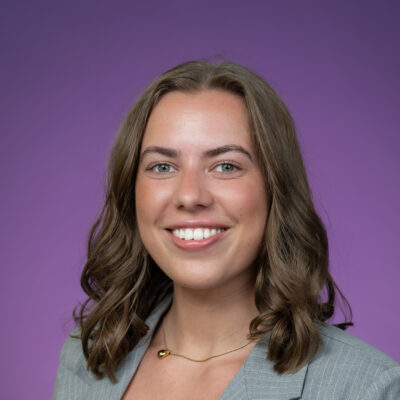
Camilla joins the department as a Graduate Assistant as she works to complete her Master of Science in Business Analytics in the Neely School of Business. She earned a Bachelor of Business Administration with a double major in Management and Marketing from the University of Nebraska-Lincoln, where she also captained the Husker rifle team. A native of Norway, Camilla is currently a degree candidate and will earn her master’s degree in Spring 2027. She can be reached directly at c.johannessen@tcu.edu or on LinkedIn.
Program: Master of Science in Business Analytics Candidate, Neely School of Business